



READY TO HANG
Out of the box, all LUMAS artworks are ready and easy to hang.

SECURELY PACKAGED
LUMAS works are always packed to the highest standard to make sure it arrives as perfectly as it leaves us.

ARTIST SUPPORTED
Your purchase supports the free and independent work of your favorite artist.

60 DAY RETURNS
Easy 60 day returns to make sure you are satisfied with every purchase.
About Damien HirstBACKGROUND INFORMATION
Damien Hirst is a global phenomenon. With groundbreaking approaches and some of the most innovative techniques in contemporary art, the visionary conceptual artist and painter has made a name for himself around the world. Today, his work represents a milestone in contemporary art.
The Emotions
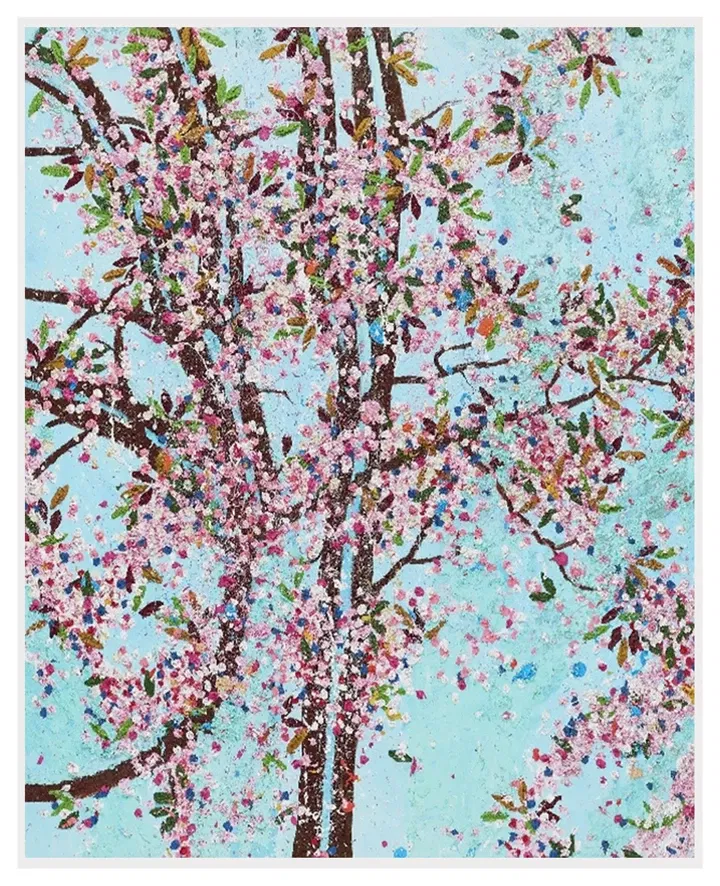
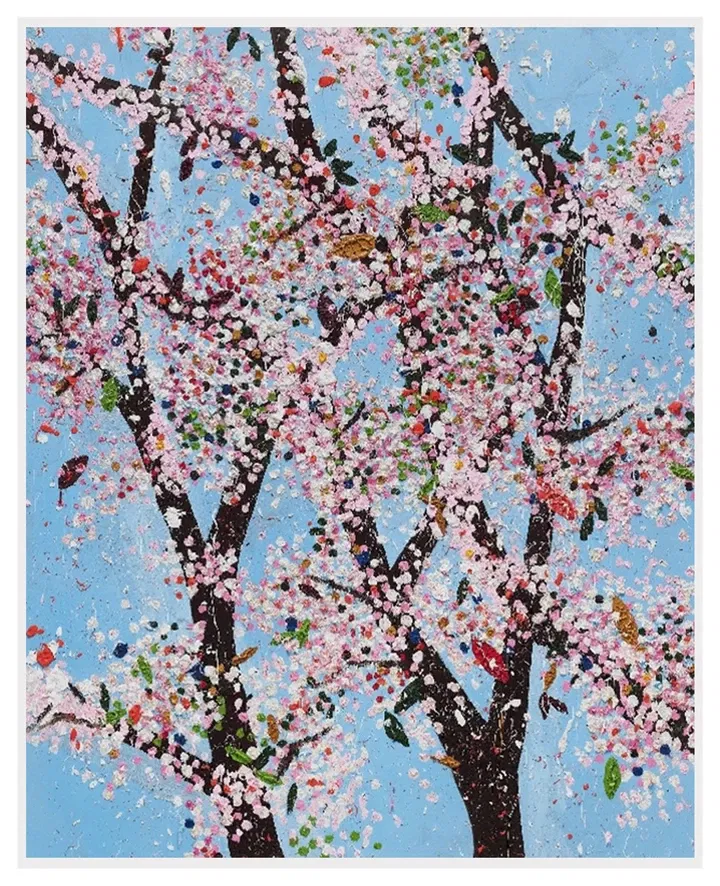
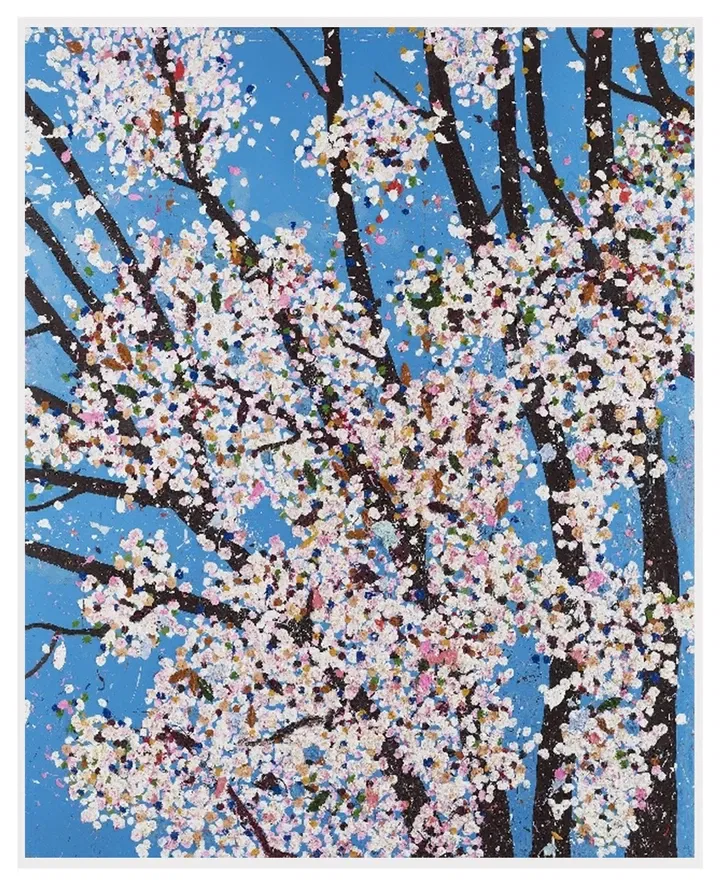
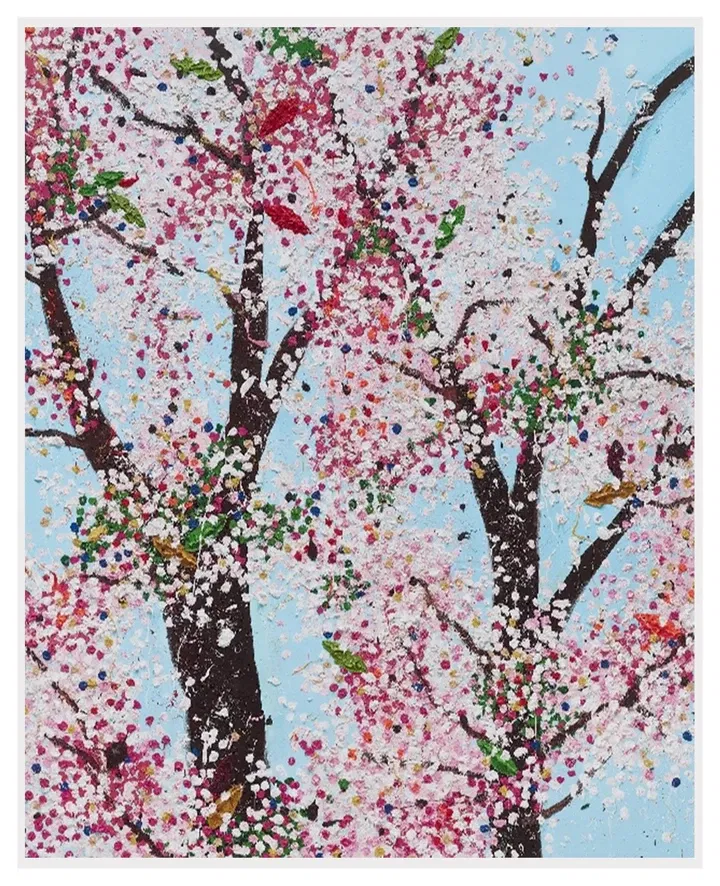
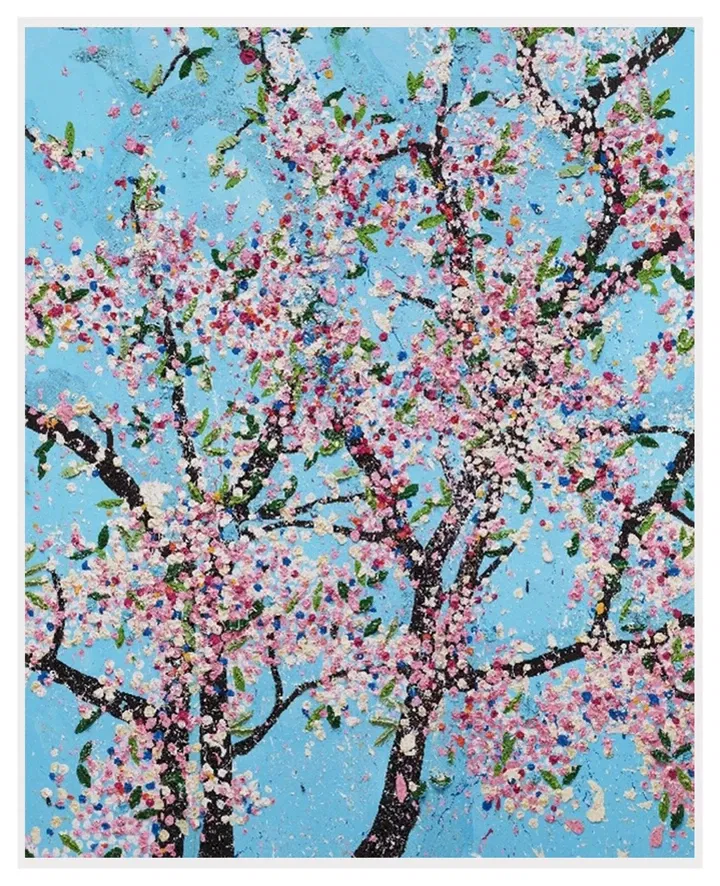
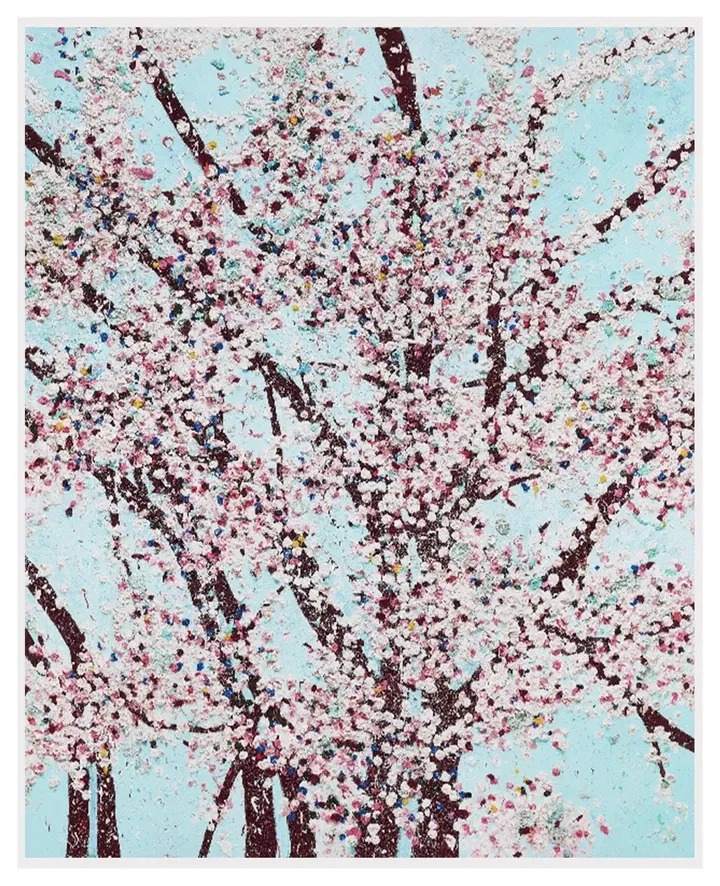
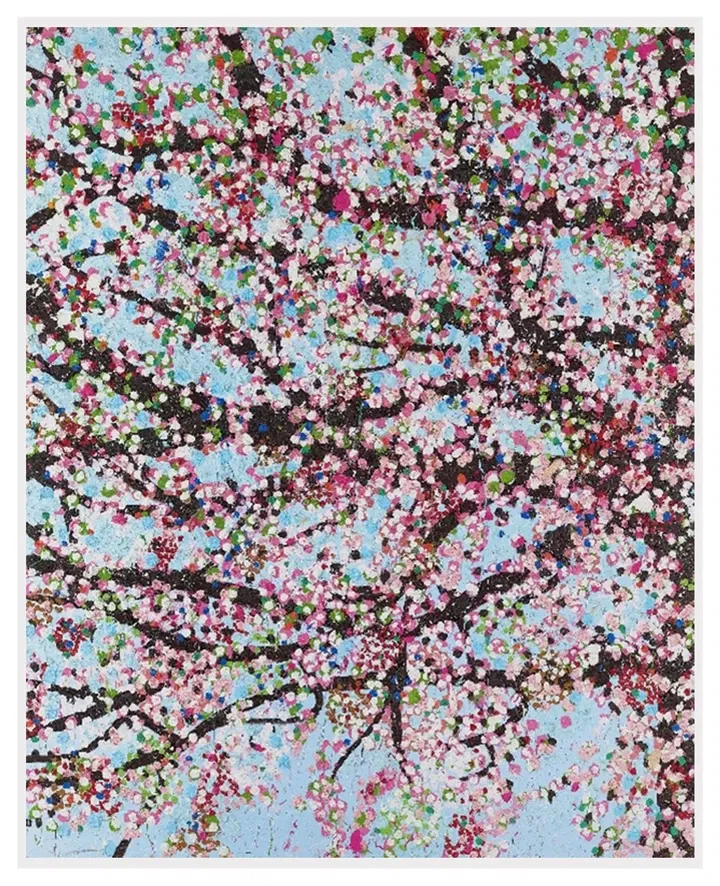
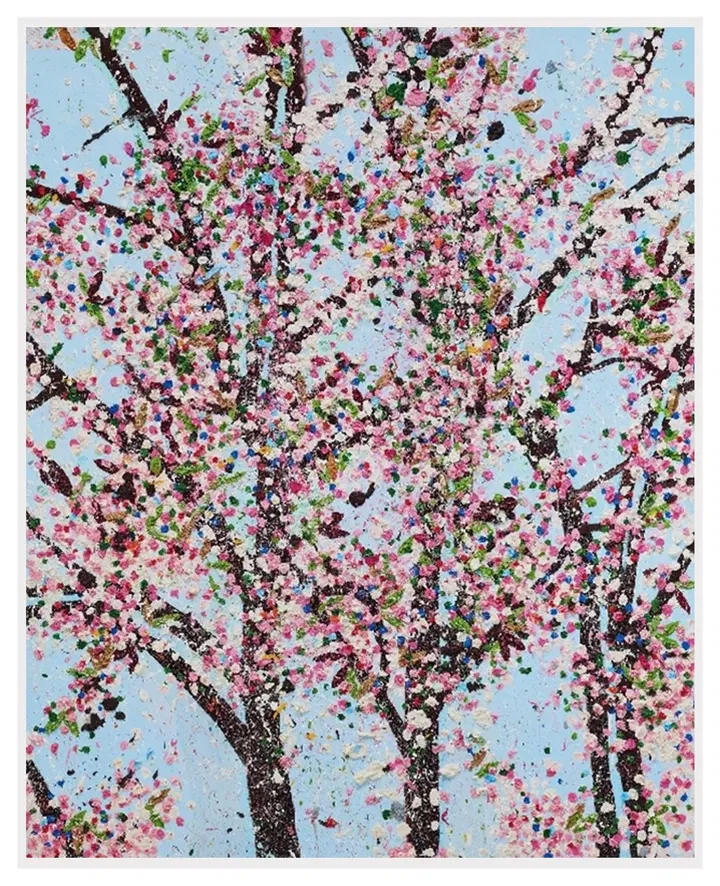
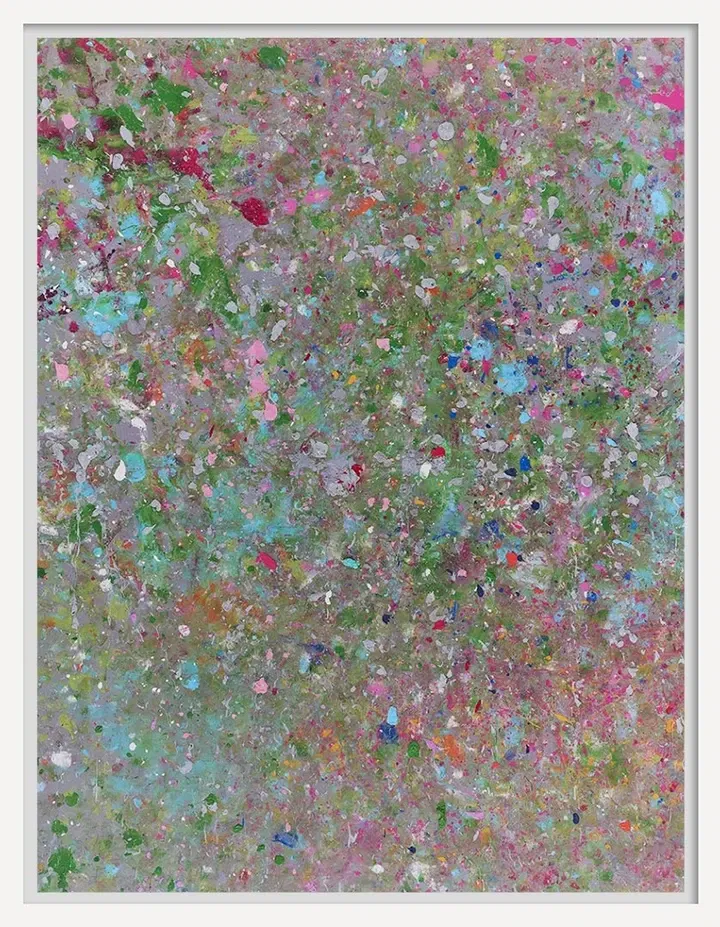
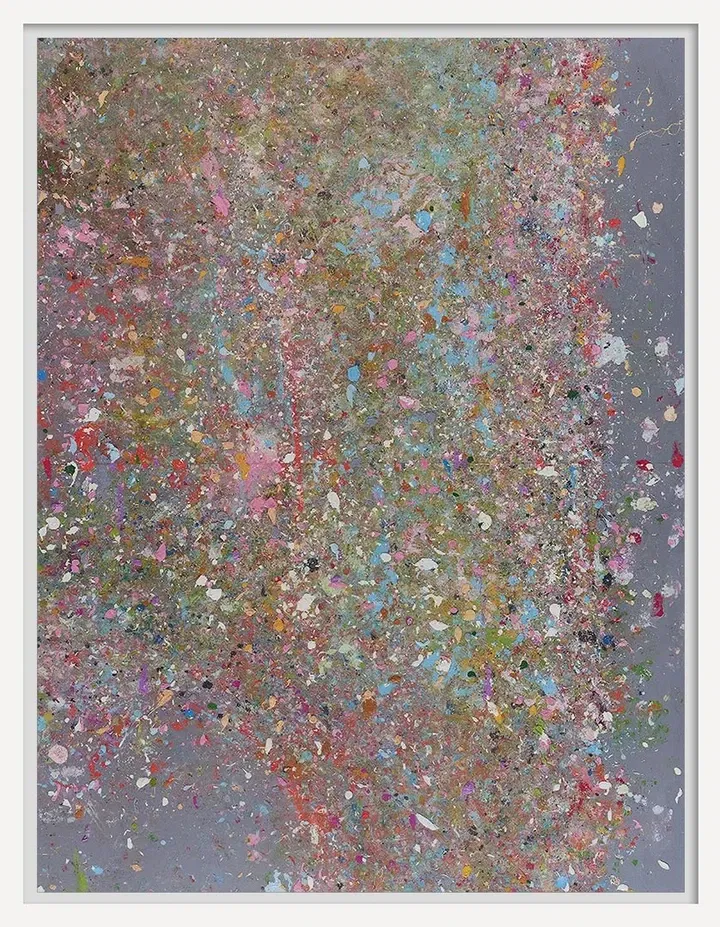
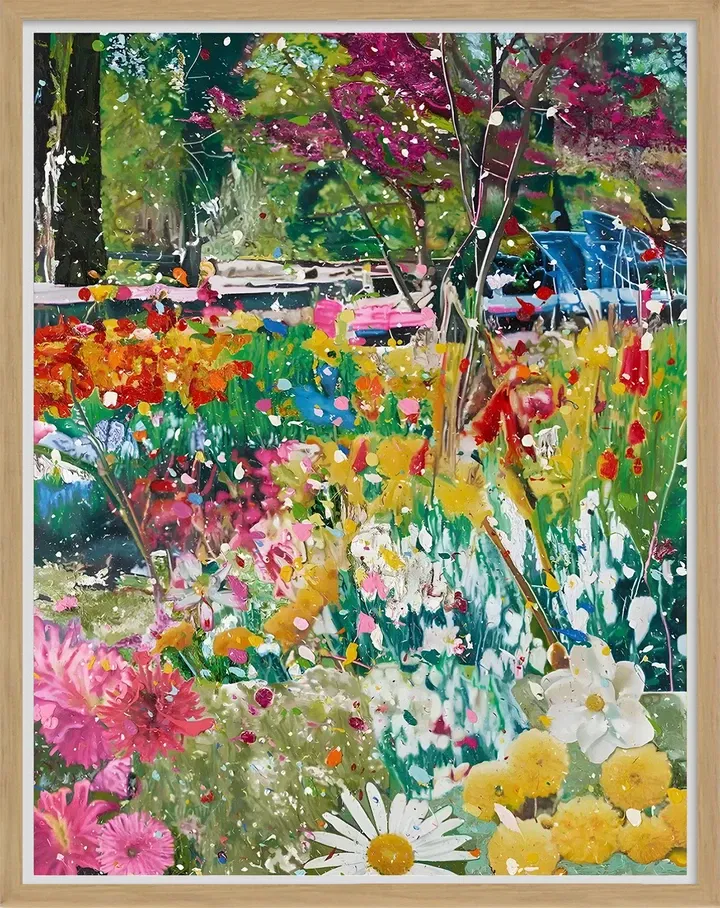
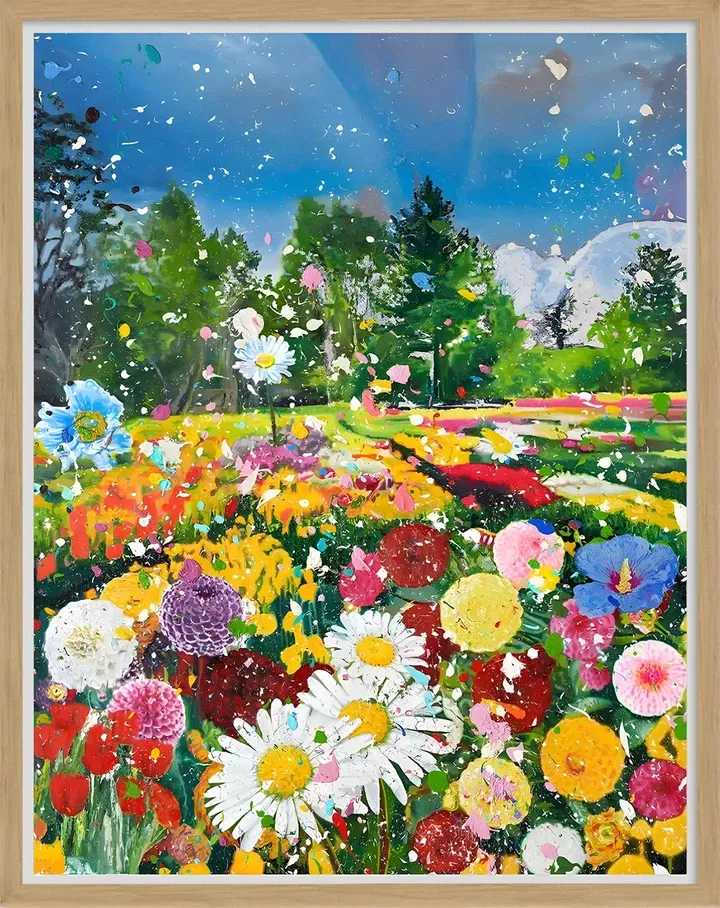
With The Emotions, Damien Hirst takes his exploration of blossom, colour and transience in a new direction. The starting point is his Jacaranda paintings, inspired by a pivotal moment during the 2024 Cherry Blossoms exhibition at Museo Jumex in Mexico City: through the glass walls, the painted pink blossoms encountered real Jacaranda trees blooming in blue. Hirst was particularly fascinated by their elusive colouration – blue and violet seem almost to dissolve in the sunlight, mingling with pink and red and, in places, appearing to merge with the sky. His fascination became the beginning of this new series.
Stylistically, The Emotions continues the path of the Cherry Blossoms: away from flawless, machine-like precision and towards a more immediate, vivid form of painting. Fine pointillist dots of colour meet expressive splashes and contrasting textures; newly introduced leaf-shaped stamps give the compositions an organic, rhythmic structure. From a distance, the traces coalesce into luxuriantly flowering trees; up close, they dissolve into individual events of colour. The works share the same format of 120 × 96 cm and can be placed side by side to form an expansive panorama.
Conceptually, too, Hirst shifts the emphasis. While the Cherry Blossoms, and particularly The Virtues, invoke moral and philosophical virtues, The Emotions turns more directly towards the human psyche. With Love, Joy, Serenity, Trust and Inspiration, Hirst gives each work a specific feeling as its point of departure. The vibrating blues, violets, pinks and reds become a resonant field for emotion: love, joy, serenity, trust and inspiration appear less as fixed messages than as moods unfolding between colour, rhythm and perception.
In this way, Hirst extends the fleeting beauty of blossom into an inner dimension. The Jacaranda becomes a symbol of a transient moment in which nature and emotion, colour and memory briefly come together.
Where the Land Meets the Sea
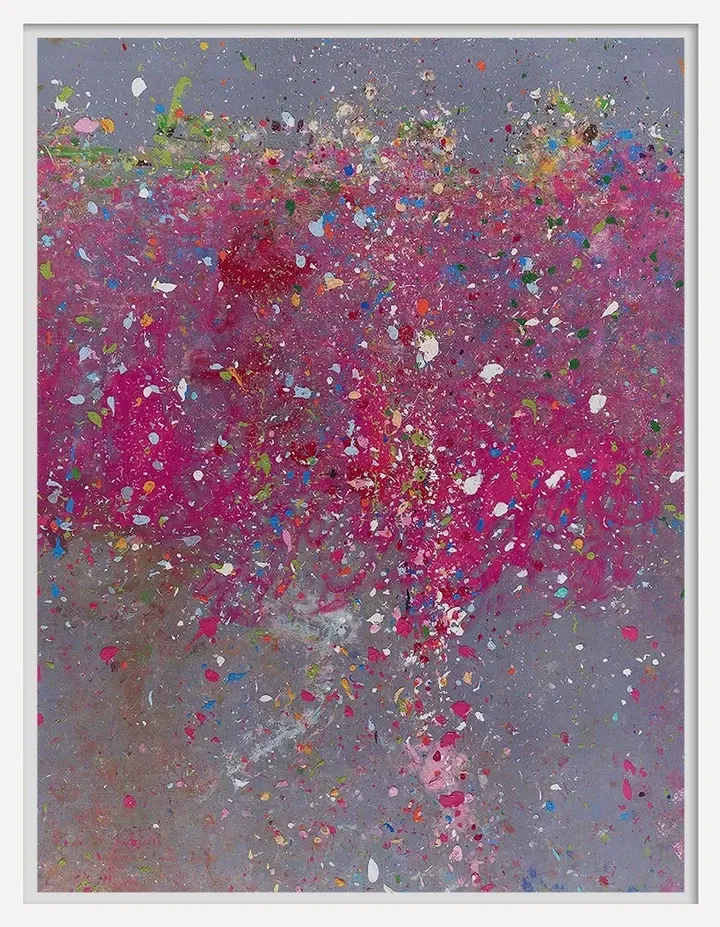
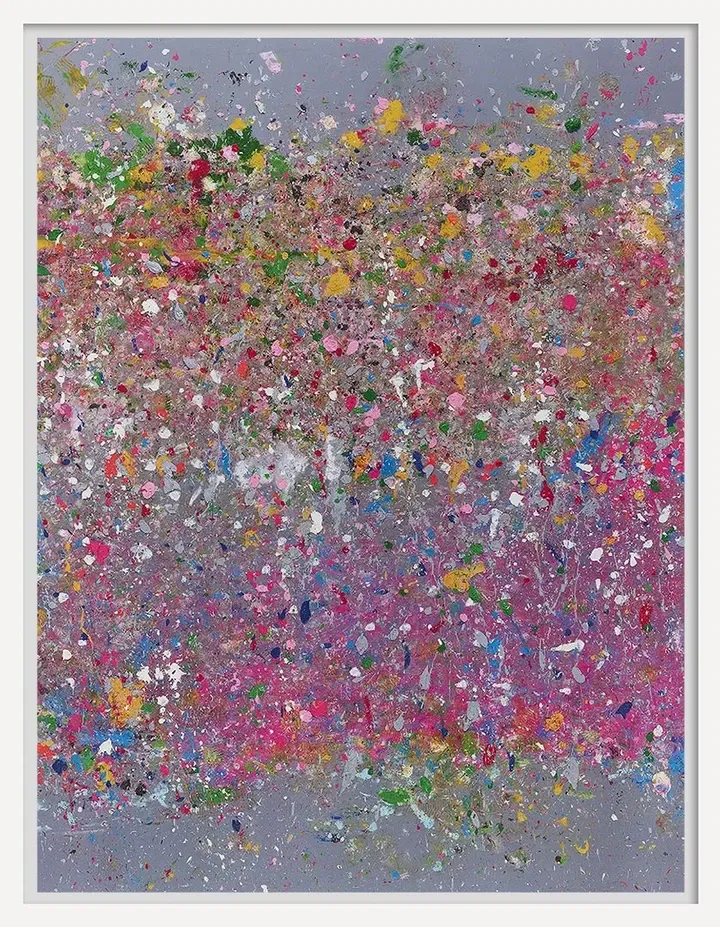
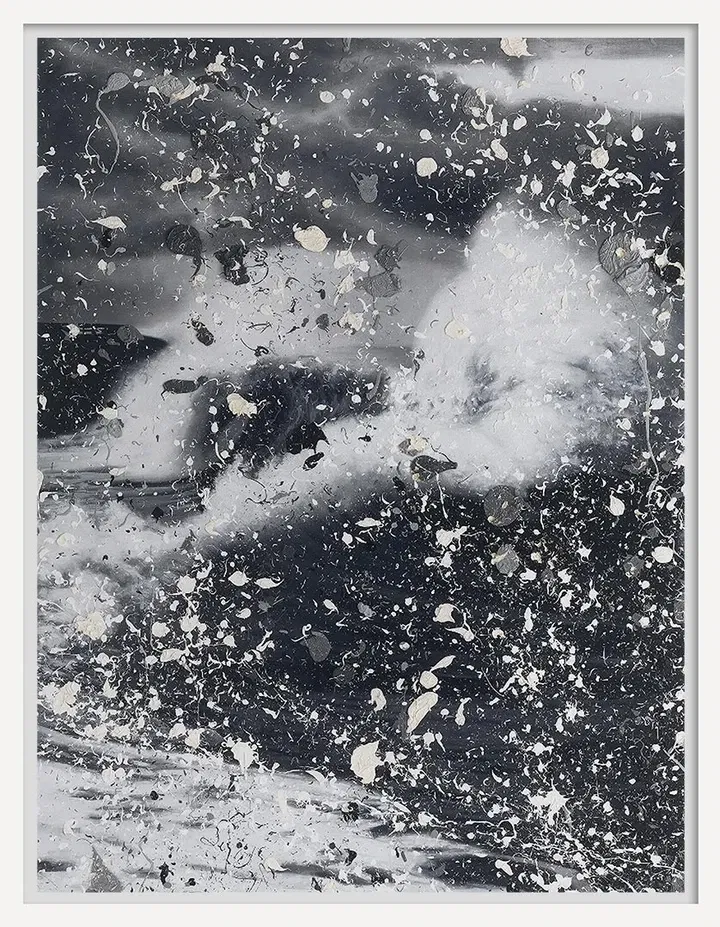
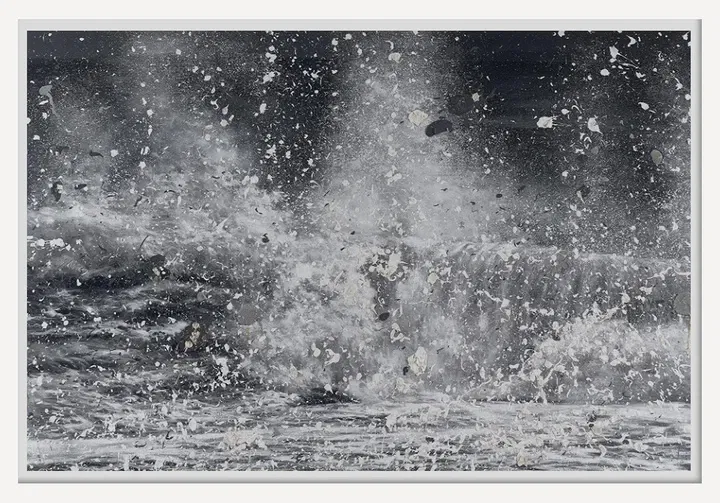
Damien Hirst’s art is known for making waves. In his series Where the Land Meets the Sea, those waves become almost physically tangible: as spray, movement and the untamed energy of the British coastline. The abstract Action Paintings translate the force of the Atlantic into colour while preserving a sense of coastal life that has stayed with Hirst since the seaside walks of his childhood. The process of creation is as essential as the finished image. The starting point was a group of canvases that lay on the floor of Hirst’s studio while he was working on his internationally acclaimed Cherry Blossoms series. Paint splashes that landed on these canvases during the painting process became the foundation of a new body of work.
The grey ground recalls the sky above a turbulent sea. Brilliant colours stand out against it just as powerfully as intense black-and-white contrasts. Inspired by Robert Motherwell’s expressionist Beside the Sea paintings, Hirst moves between gestural painting, photographic memory and abstraction. The result is a series of highly dynamic compositions in which personal biography, painterly energy and the elemental force of the Atlantic converge.
The Beautiful Paintings
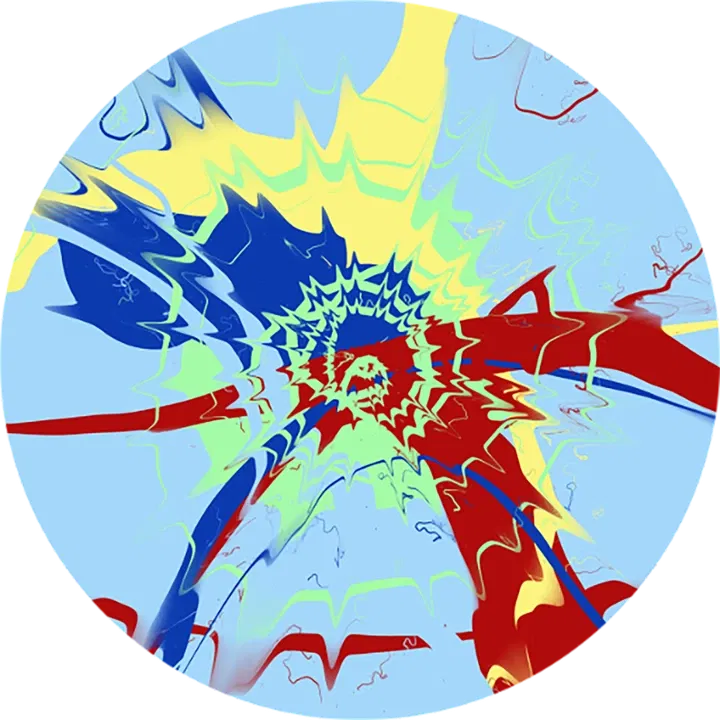
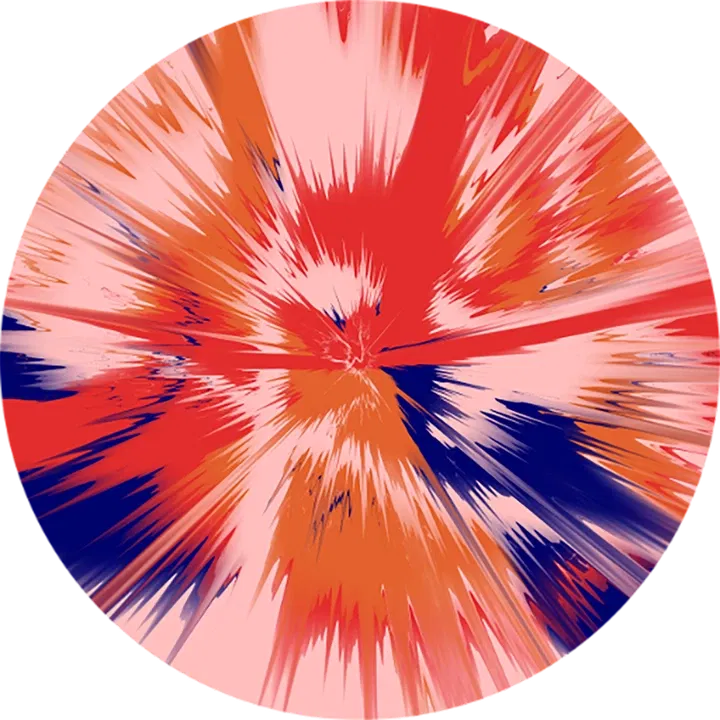
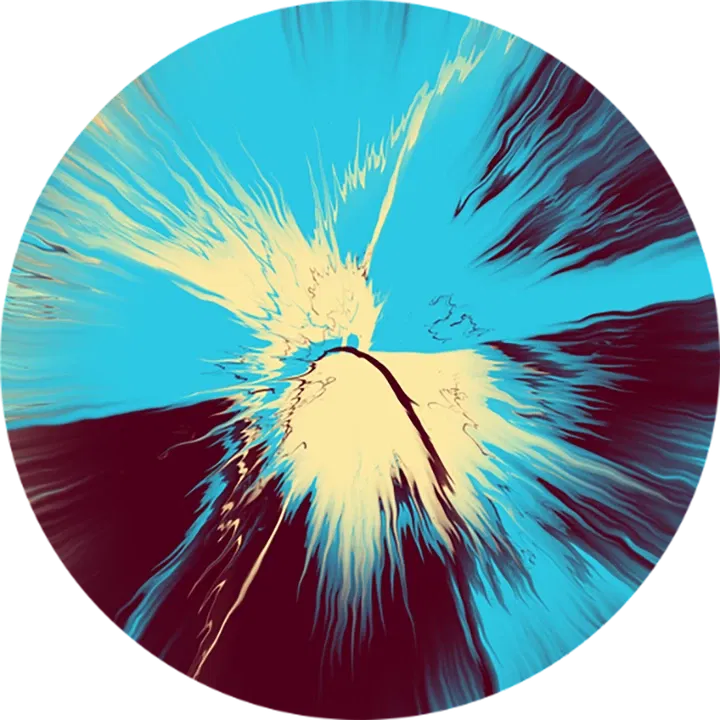
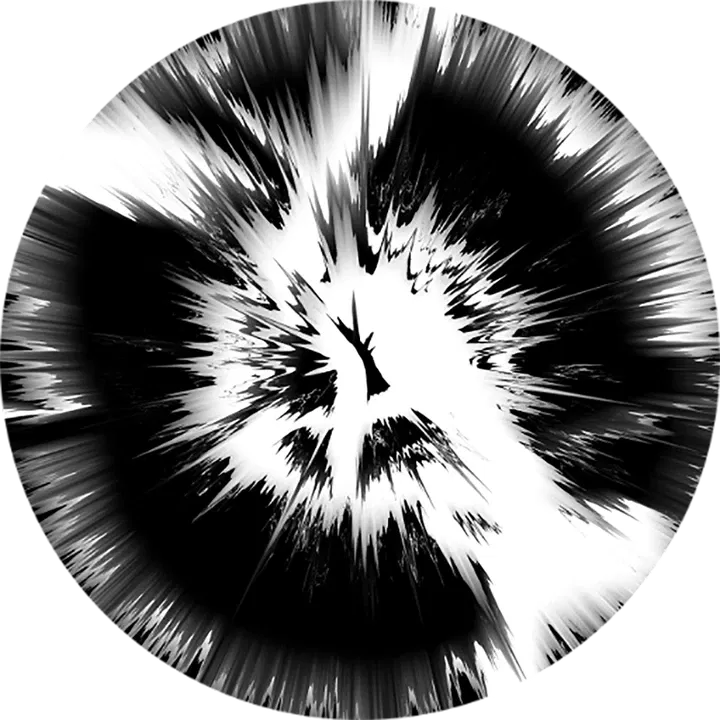
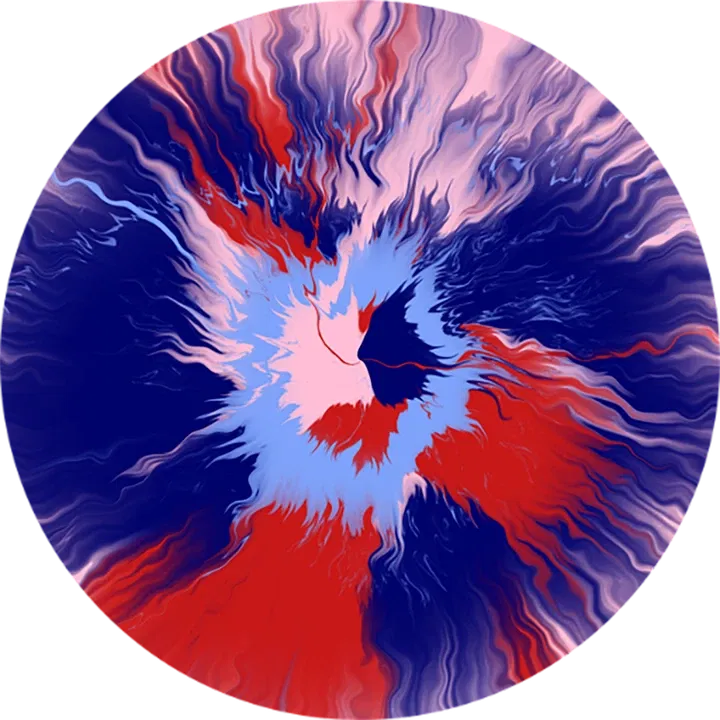
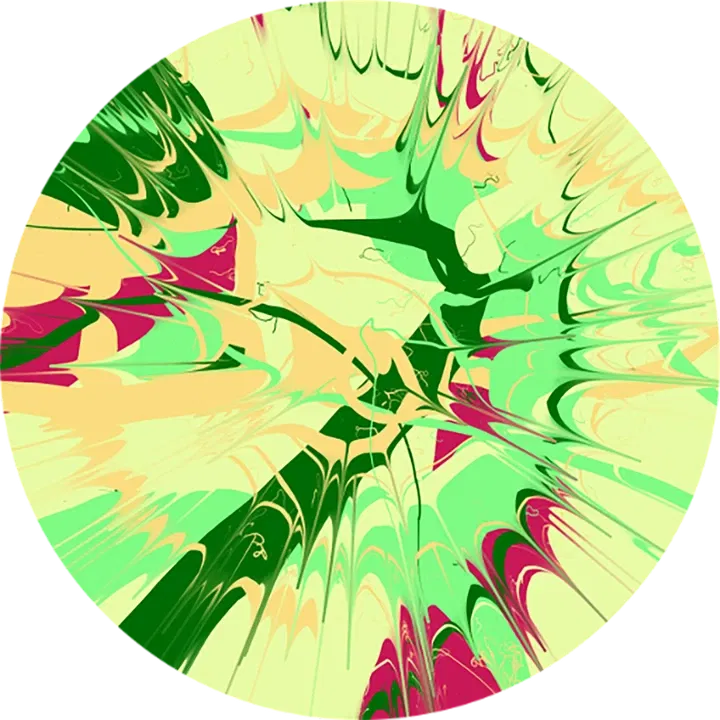
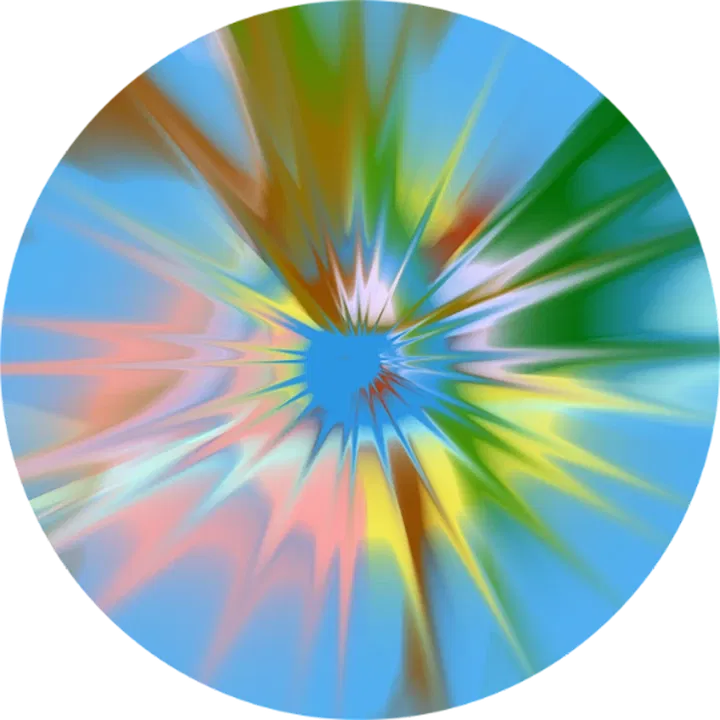
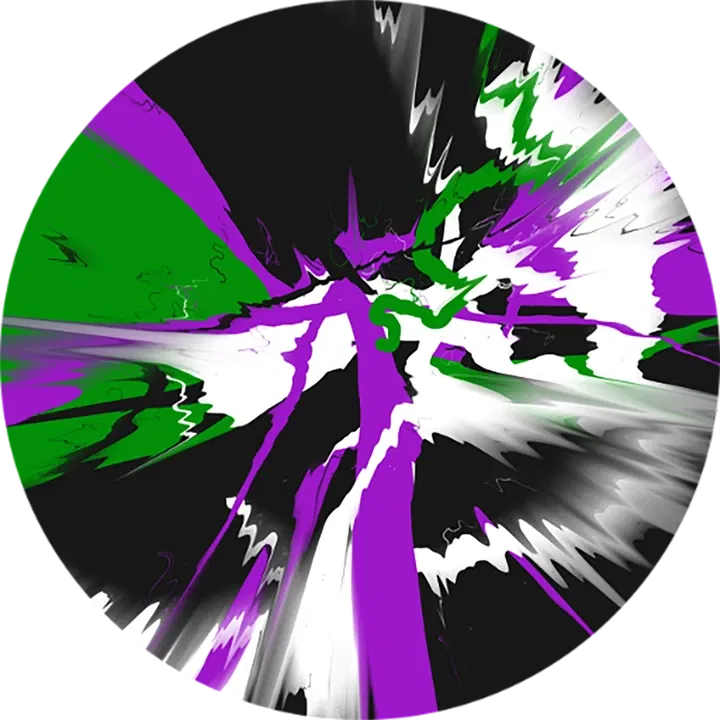
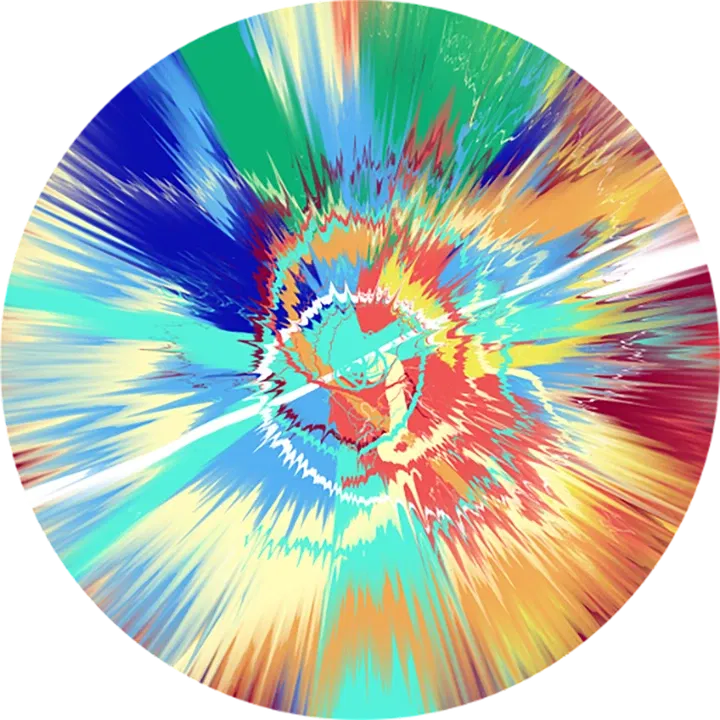
Damien Hirst’s Beautiful Paintings bring his famous Spin Paintings into the digital present. From the outset, their creation was shaped by the interplay of control and chance: paint hits a rotating canvas and spreads into rays, streaks and explosive movements – making each work unique.
For the Beautiful Paintings, Hirst transfers this principle into specially developed digital processes. From a palette of more than 250 colours and over 20 different style variations, ever-new combinations of colour, form and movement emerge. Chance remains a decisive element of the composition.
Like the classic Spin Paintings, these works are also conceived on circular supports. Their characteristic form creates a direct connection to the original series while continuing Hirst’s long-standing exploration of uniqueness, variation and authorship.
The role of the collectors is particularly significant: they were able to help shape individual combinations and thereby became part of the creative process themselves. Hirst once again shifts the boundaries between artist, artwork and audience. From the interplay of decision, chance and digital technology emerge intensely coloured works whose visual energy is immediately perceptible.
The Empresses
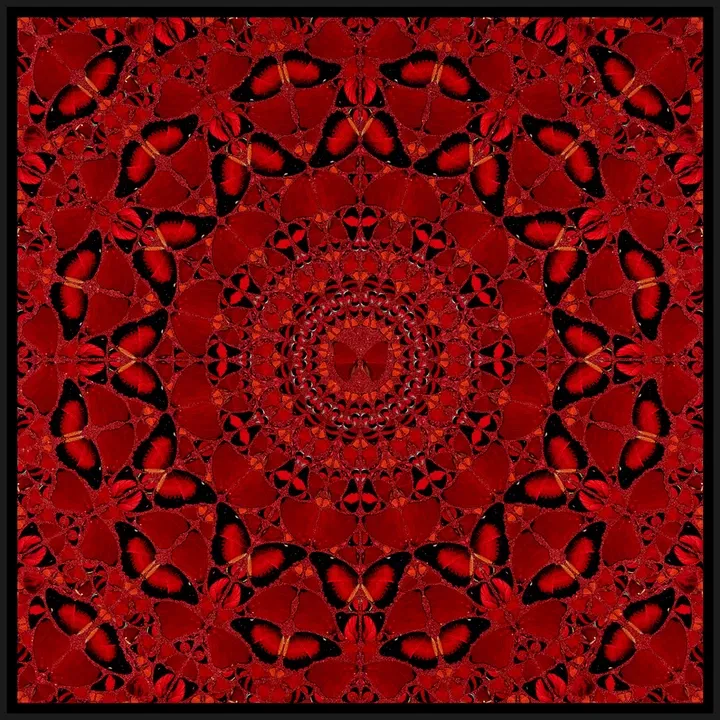
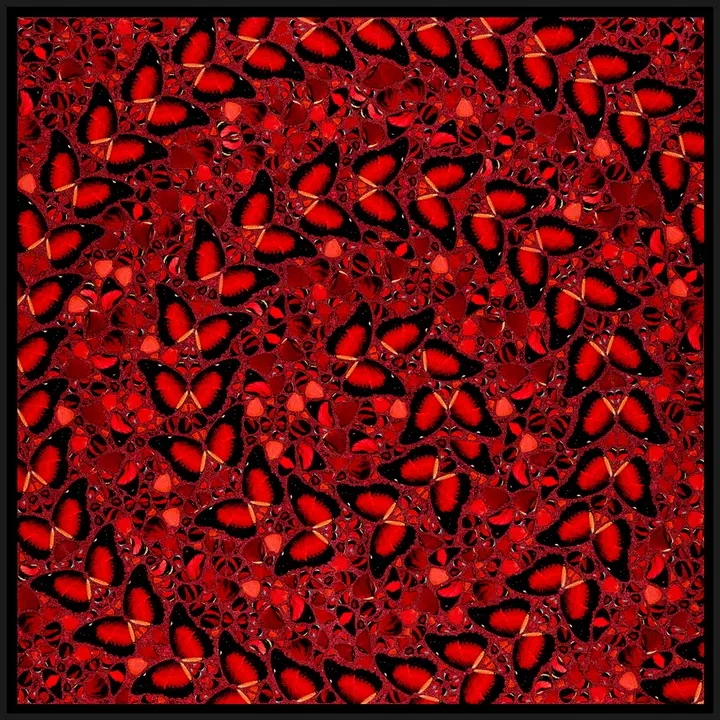
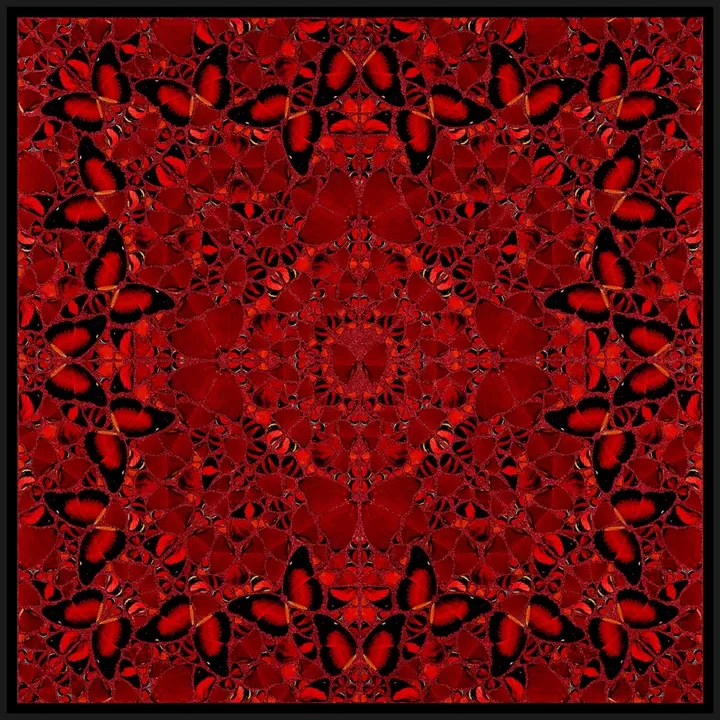
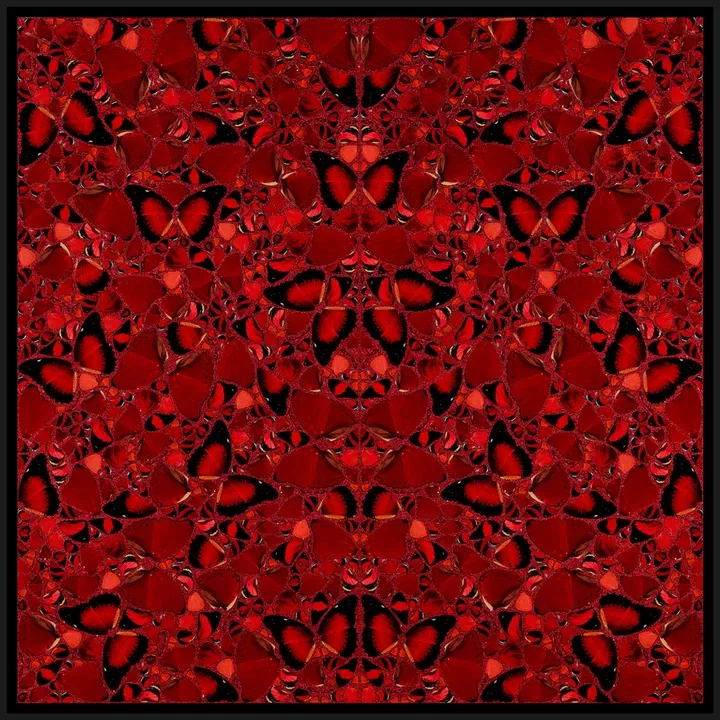
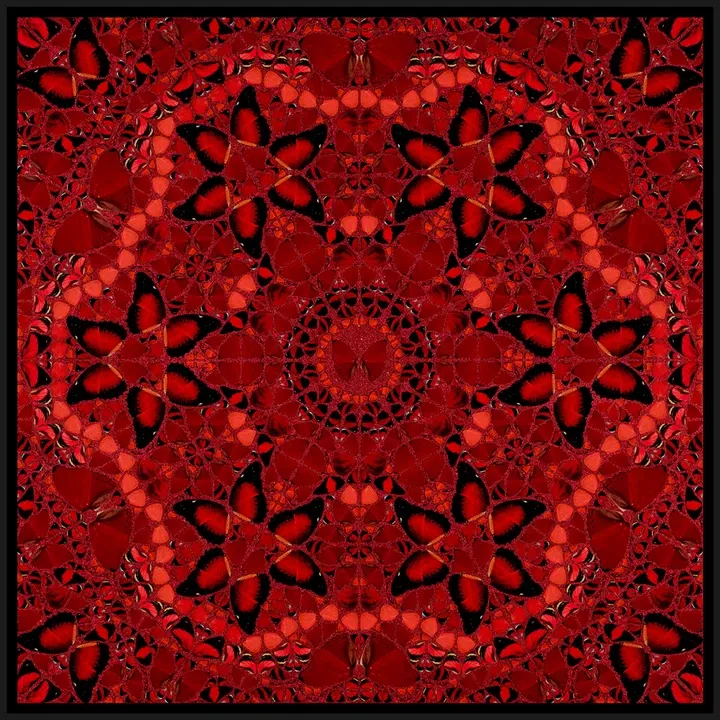
The butterfly is one of the recurring motifs in Damien Hirst’s work. It symbolises beauty, transformation and transience in equal measure. In the five-part series The Empresses, Hirst combines this motif with historical female figures, opening a view onto rulers from different cultures and eras.
The screenprints, embellished with fine glitter, bear the names of Nur Jahan, Theodora, Wu Zetian, Suiko and Taytu Betul. Their biographies lead into Persian-Indian, Byzantine, Chinese, Japanese and Ethiopian history.
Hirst dedicates not only an individual work to each ruler, but also a distinctive ornamental structure. Only on closer inspection does it become apparent that these patterns are composed of countless butterfly wings. Their form and composition refer to historical and biographical aspects of each empress.
The works thus combine visual opulence with historical memory. They invite the viewer to look beyond their decorative surface and engage with the lives and legacies of women whose influence was far-reaching, but whose stories are often less present in Western cultural memory.
The Virtues
Damien Hirst demonstrates with The Virtues that remaining true to oneself can also mean continually reinventing oneself. The works developed out of his large-scale Cherry Blossoms – a series through which Hirst also approached a subject his mother had long wished to see him paint: flowers.
Over several years, Hirst worked intensively and largely in seclusion on the Cherry Blossoms. Monumental canvases emerged in his London studio, where dense layers of colour, gestural brushstrokes, drips and splashes condensed into flowering landscapes.
Hirst painted, dripped and flung colour onto the canvas, repeatedly stepping back and then moving closer again. From this oscillation between control and exuberance emerged his highly individual interpretation of the Japanese cherry blossom.
Yet for Hirst, the blossom does not signify beauty alone. It also evokes its transience – and with it, one of the central themes running throughout his entire oeuvre: the inseparable connection between life and death.
The Cherry Blossoms were shown, among other venues, at the Fondation Cartier in Paris and the National Art Center, Tokyo. The Virtues translate their lush colour and symbolic resonance into a concentrated body of work in which Hirst’s fascination with beauty, time and transience becomes visible once again.
About the Artist
In the beginning was the dot.
Circular, clearly defined, coloured – at first simple, almost incidental. In the late 1980s, Damien Hirst began creating the dot paintings that would later become one of his best-known bodies of work. Evenly arranged circles of colour formed grid-like structures whose apparent simplicity concealed a complex meditation on colour, order and meaning.
How can colour be used so directly that it becomes both pure appearance and a carrier of meaning? This question has run through Hirst’s work since his early Spot Paintings. Some of these works refer directly to the aesthetics of the pharmaceutical industry. Soft or luminous colours, arranged in serial patterns, recall pills and medical preparations. Hirst intensified this association by naming numerous works after pharmaceutical substances. Scientific language, industrial production and the seductive effect of colour thus enter into an unusual dialogue.
The transfer of meaning from one medium to another is one of the fundamental principles of his art. This became particularly striking in 1991 with The Physical Impossibility of Death in the Mind of Someone Living: a tiger shark preserved in formaldehyde appears to swim towards the viewer, jaws open, inside a vast glass vitrine. The real animal becomes sculpture, the biological specimen becomes an image of death – and death, in turn, becomes something that escapes our imagination.
Few artists of his generation have repeatedly managed to polarise audiences to such a degree while simultaneously setting the international art market in motion.
In 2007, Hirst once again attracted worldwide attention with For the Love of God: a human skull cast in platinum and set with 8,601 diamonds, including a large pink diamond on the forehead. The work became emblematic of an art in which beauty, luxury, provocation and death are inseparably intertwined.
This ambivalence lies at the heart of Hirst’s work. His art repeatedly revolves around the finitude of life – without ever being exclusively morbid. Hirst himself has described his fascination with death rather as a form of celebrating life.
Whether preserved animals, kaleidoscopic butterfly images, colour-exploding Spin Paintings or luxuriant cherry blossoms: in Damien Hirst’s work, life and death, beauty and transience, attraction and unease always exist side by side. It is precisely from this tension that his work continues to derive its enduring power.
VITA
1965 Born in Bristol, UK 1986-1989 Goldsmith College „Fine Arts“ 1988 Curator of the exhibition „Freeze“, Surrey Docks, London, UK 1990 Curator of the exhibition „Modern Medicine“, Building One, London, UK 2007 The artwork “For the Love of God” is sold for € 75 Million and is the most expensive work of contemporary art according to British media reports Lives in Devon and has Studios in London, Gloucester and Devon, UK Exhibitions
Solo Exhibitions
(Collection)
2026 Nothing Is True But Everything Is Possible, National Museum of Modern and Contemporary Art (MMCA), Seoul, South Korea 2025 Drawings, Albertina Modern, Vienna, Austria 2024 To Live Forever (For a While), Museo Jumex, Mexico City, Mexico The Light That Shines, Château La Coste, Aix-en-Provence, France 2023-2024 The Weight of Things, MUCA – Museum of Urban and Contemporary Art, Munich, Germany 2023 Where Land Meets the Sea, Phillips, London, UK 2022 The Currency, Newport Street Gallery, London, UK Natural History, Gagosian, London, UK Cherry Blossoms, National Art Center, Tokyo, Japan Myths, Legends and Monsters, Gagosian, Gstaad, Switzerland Forgiving and Forgetting, Gagosian, New York, USA 2021 Archaeology Now, Galleria Borghese, Rome, Italy Cherry Blossoms, Fondation Cartier pour l’art contemporain, Paris, France Fact Paintings and Fact Sculptures, Gagosian, London, UK Cathedrals Built on Sand, Gagosian, Paris, France His Own Worst Enemy, White Cube, Hong Kong Forgiving and Forgetting, Gagosian, Rome, Italy 2020 End of a Century, Newport Street Gallery, London, UK 2019 Mandalas, White Cube, London, UK Damien Hirst, Yorkshire Sculpture Park / Yorkshire Sculpture International, Wakefield, UK 2018 Damien Hirst at Houghton Hall, Houghton Hall, Norfolk, UK Colour Space Paintings, Gagosian, New York, USA The Veil Paintings, Gagosian, Los Angeles, USA Damien Hirst, Galerie Bastian, Berlin, Germany 2017 Treasures from the Wreck of the Unbelievable, Palazzo Grassi and Punta della Dogana, Pinault Collection, Venice, Italy Visual Candy and Natural History, Gagosian, Hong Kong 2015 Damien Hirst, Astrup Fearnley Museet, Oslo, Norway 2014 Black Scalpel Cityscapes, White Cube, São Paulo, Brazil Schizophrenogenesis, Paul Stolper Gallery, London, UK 2013 Freedom Not Genius, Multimedia Art Museum / Moscow House of Photography, Moscow, Russia Entomology Cabinets and Paintings, Scalpel Blade Paintings and Colour Charts, White Cube, Hong Kong 2012 Damien Hirst, Tate Modern, London, UK The Complete Spot Paintings 1986–2011, Gagosian, international venues Two Weeks One Summer, White Cube, London, UK 2010 Cornucopia, Musée Océanographique de Monaco, Monaco For the Love of God, Palazzo Vecchio, Florence, Italy 2009 Nothing Matters, White Cube, London, UK 2008 Requiem, PinchukArtCentre, Kyiv, Ukraine For the Love of God, Rijksmuseum, Amsterdam, Netherlands 2007 Beyond Belief, White Cube, London, UK 2006 The Death of God – Towards a Better Understanding of a Life Without God Aboard the Ship of Fools, Galería Hilario Galguera, Mexico City, Mexico 2005 Damien Hirst, Astrup Fearnley Museet, Oslo, Norway 2004 The Agony and the Ecstasy: Selected Works from 1989–2004, Museo Archeologico Nazionale di Napoli, Naples, Italy 2003 Romance in the Age of Uncertainty, White Cube, London, UK Group Exhibitions
(Collection)
2026–2027 The 90s: Art and Fashion, Tate Britain, London, UK 2026 ANIMALIA. Of Animals and Humans, Heidi Horten Collection, Vienna, Austria 2025–2026 Triple Trouble: Shepard Fairey, Damien Hirst, Invader, Newport Street Gallery, London, UK 2020 Colección Jumex: On the Razor’s Edge, Museo Jumex, Mexico City, Mexico Love, Life, Death, and Desire, Yale Center for British Art, New Haven, USA 2019 Objects of Wonder: British Sculpture from the Tate Collection 1950s–Present, PalaisPopulaire, Berlin, Germany Yorkshire Sculpture International 2019, Leeds/Wakefield, UK 2018 The Last Image. Photography and Death, C/O Berlin, Berlin, Germany 2017 Colori. The Emotions of Color in Art, Castello di Rivoli, Turin, Italy 2016 Creature, The Broad, Los Angeles, USA Sculpture on the Move 1946–2016, Kunstmuseum Basel, Basel, Switzerland LIFE ITSELF, Moderna Museet, Stockholm, Sweden 2015 Magnificent Obsessions: The Artist as Collector, Barbican Art Gallery, London, UK What We Call Love: From Surrealism to Now, Irish Museum of Modern Art, Dublin, Ireland 2014 14 Rooms, Art Basel, Basel, Switzerland 2012 Regarding Warhol: Sixty Artists, Fifty Years, The Metropolitan Museum of Art, New York, USA British Design 1948–2012: Innovation in the Modern Age, Victoria and Albert Museum, London, UK 12 Rooms, Museum Folkwang, Essen, Germany 2011 Yokohama Triennale, Yokohama Museum of Art, Yokohama, Japan The Luminous Interval, Guggenheim Museum Bilbao, Bilbao, Spain 2010 C’est la vie: Vanités de Caravage à Damien Hirst, Musée Maillol, Paris, France 2009–2010 Pop Life: Art in a Material World, Tate Modern, London / Hamburger Kunsthalle, Hamburg, Germany 2009 Medicine and Art: Imagining a Future for Life and Love, Mori Art Museum, Tokyo, Japan 2008 Statuephilia, British Museum, London, UK Color Chart: Reinventing Color, 1950 to Today, Museum of Modern Art (MoMA), New York, USA Blood on Paper: The Art of the Book, Victoria and Albert Museum, London, UK 2007 Turner Prize: A Retrospective, Tate Britain, London, UK RE-OBJECT, Kunsthaus Bregenz, Bregenz, Austria 2006 The François Pinault Collection: A Post-Pop Selection, Palazzo Grassi, Venice, Italy Into Me / Out of Me, MoMA PS1, New York, USA 2005 Contemporary Voices: Works from the UBS Art Collection, Museum of Modern Art (MoMA), New York, USA Prague Biennale 2, Prague, Czech Republic 2004 In-A-Gadda-Da-Vida, Tate Britain, London, UK Monument to Now, DESTE Foundation for Contemporary Art, Athens, Greece 2003 Dreams and Conflicts: The Dictatorship of the Viewer, 50th Venice Biennale, Venice, Italy 1997 Sensation: Young British Artists from the Saatchi Collection, Royal Academy of Arts, London, UK 1988 Freeze, Surrey Docks, London, UK

